

Gum treatment in Alicante
Including the awkward ones: gums around implants that are already in.
Gums, teeth and implants
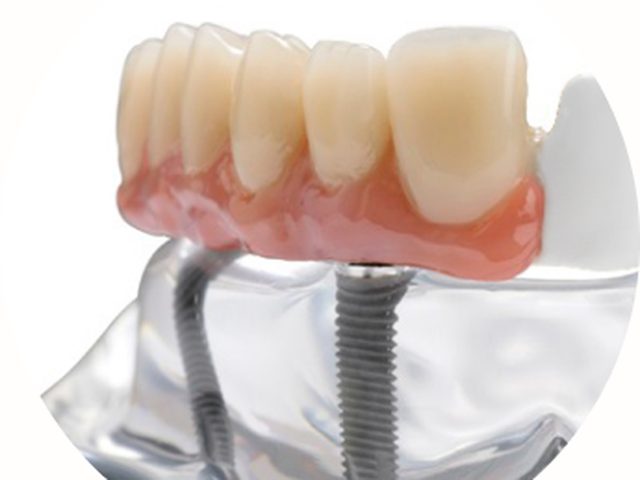
Periodontal disease destroys the support of a tooth painlessly and over years. There is a less familiar and increasingly common variant: peri-implantitis, which does exactly the same thing around an implant that is already in place.
Peri-implantitis
An implant cannot decay, but it does lose bone if the gum around it becomes infected. The process runs faster than around a natural tooth, because the implant has no periodontal ligament acting as a barrier. Catching it early is the only thing that saves it.
Why it matters before surgery
A good proportion of the failed implants we review had untreated gum disease at the moment they were placed. Settling the gums before surgery is not a recommendation: it is what separates an implant that lasts twenty years from one lost in three.
If you have implants and notice bleeding or swelling around them, get it looked at soon.
-
Stops bone loss
The aim is to halt progression before teeth are lost.
-
Measured diagnosis
Six-point probing per tooth and radiographic control, not a visual estimate.
-
Tailored maintenance
Check-up intervals are set by your actual risk, not a standard calendar.
At this clinic
Periodontics and implant maintenance
At the Luceros clinic we treat both classic periodontitis and peri-implantitis, which needs a different decontamination protocol from the one used around a natural tooth.
The periodontal chart covers existing implants too: probing, radiographs and a record of how they change at every review.
- Diagnosis and treatment of peri-implantitis.
- Periodontal charting of existing implants as well.
- Gums settled before any surgery.
How it is treated
-
Periodontal study
Full probing, radiographs and a baseline record so progress can be measured.
-
Treatment phase
Scaling and root planing by quadrant, with laser or surgery where the case requires it.
-
Maintenance
Regular reviews matched to your risk. This phase determines the long-term outcome.
Common questions
Frequently asked questions about this treatment
01 My gums bleed when I brush — is that normal?
No. Healthy gums do not bleed. Bleeding is the first sign of inflammation and, at that stage, treatment is straightforward and the damage reversible.
02 Can periodontitis be cured?
It can be controlled, not cured in the sense of regrowing lost bone. The aim of treatment is to halt progression and stabilise the situation. That is why early diagnosis changes the prognosis so much.
03 Does scaling and root planing hurt?
It is carried out under local anaesthetic, quadrant by quadrant. There may be cold sensitivity in the days afterwards, which settles.
04 Can I have implants if I have had periodontitis?
Yes, but the disease has to be stabilised first. Placing implants alongside active periodontitis greatly increases the risk of peri-implantitis and implant failure.
05 How often do I need maintenance appointments?
It depends on your individual risk: for some patients every three months, for others every six. The interval is set after the treatment phase and reviewed over time.
Other treatments you may be interested in

First assessment
Request your periodontics assessment in Alicante
- We call you to understand your case before proposing anything.
- Diagnosis with digital planning and a fixed written quote.
- No obligation: if you do not need treatment, we will tell you.
Prefer to talk to us directly? 965 022 202 · WhatsApp